
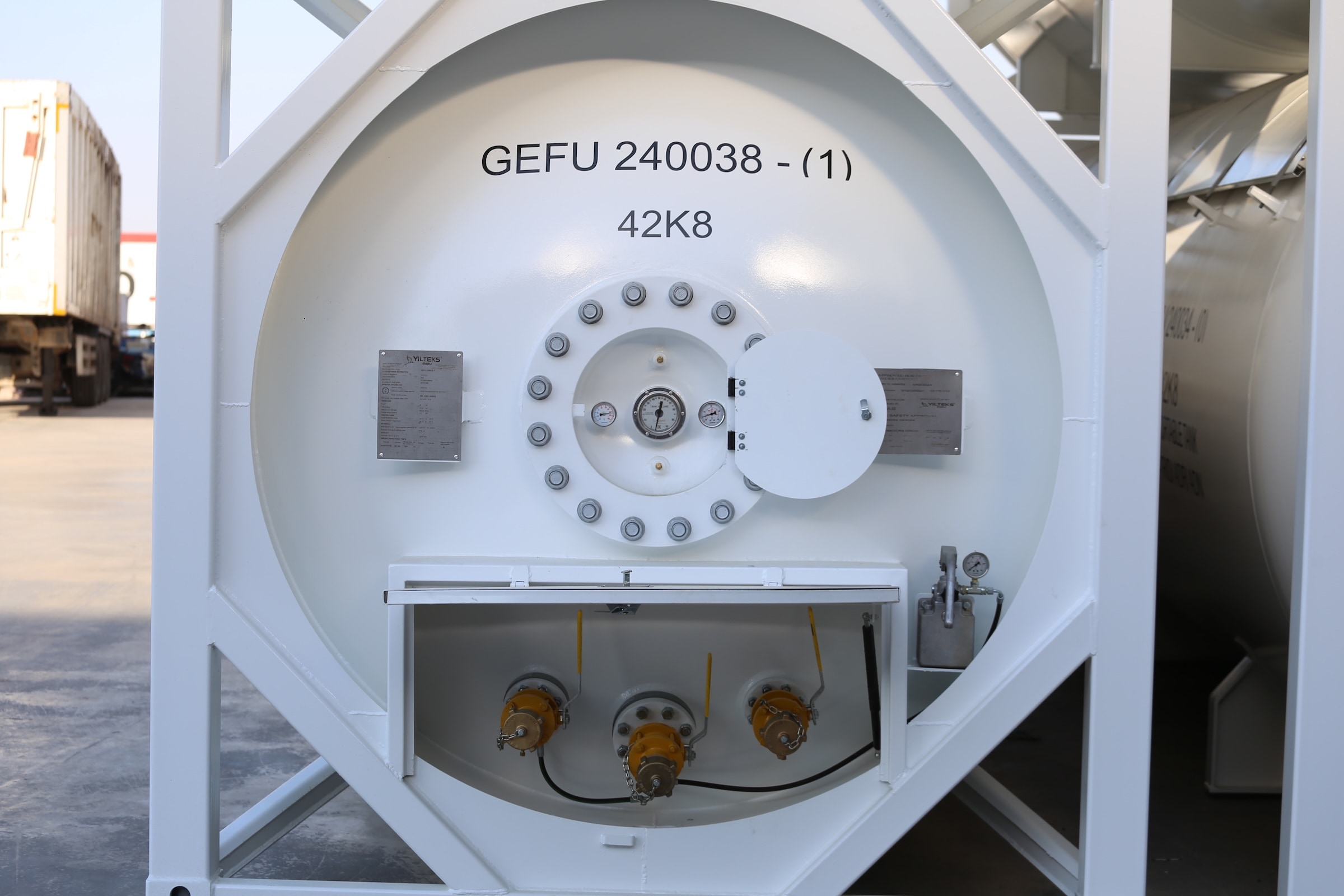
ISO Tankları
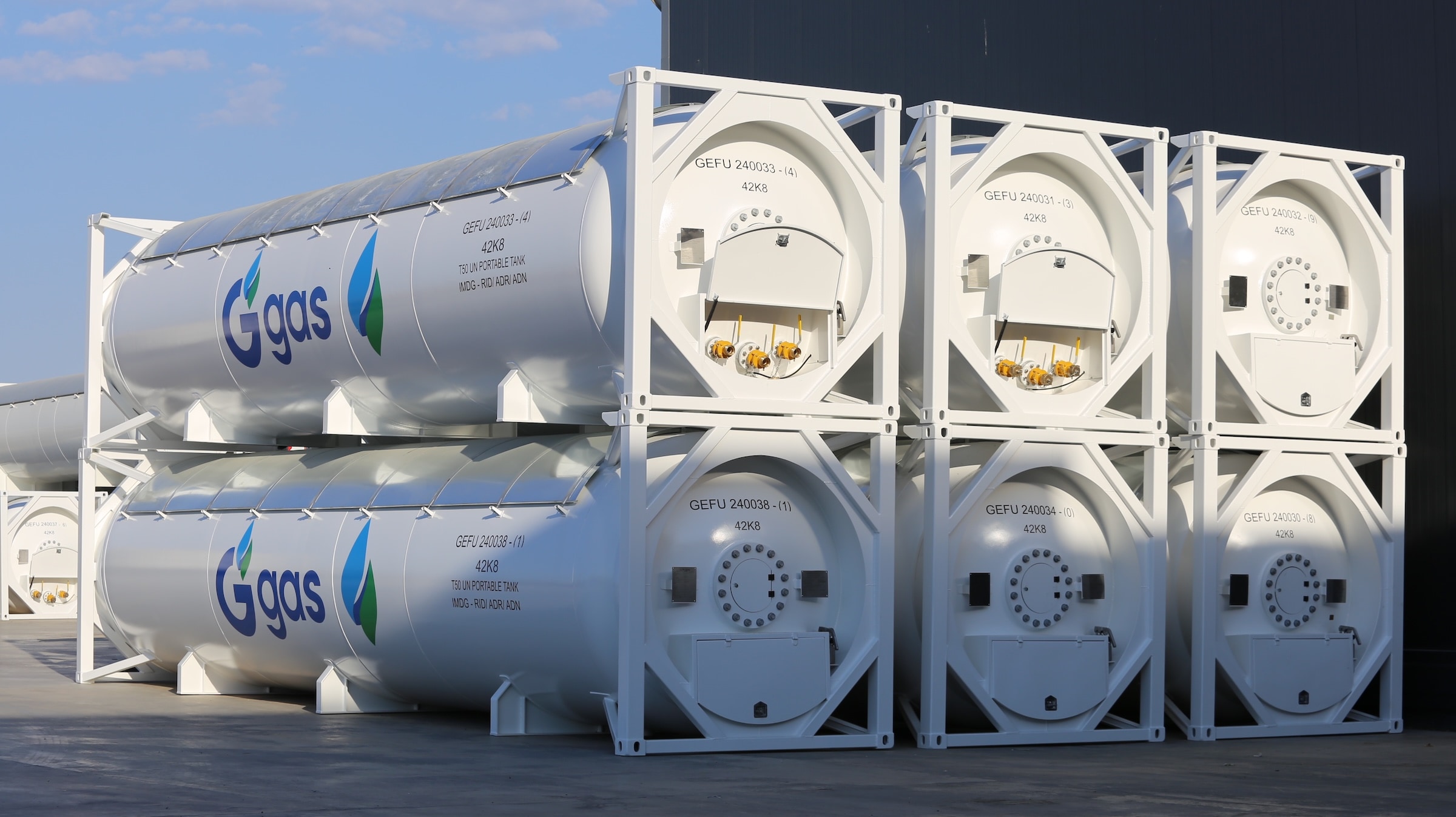
ISO tanks are cylindrical tanks designed for the international transport of liquids, gases, or powders, housed within a steel outer frame. They are manufactured in accordance with international standards such as ISO 6346 and ISO 1496-3. Compatible with sea, road, and rail transport, they ensure the safe transport of both hazardous and non-hazardous materials. Resistant to high pressure and external influences, these tanks play an important role in logistics in terms of efficiency and safety.
General Features
- The tank is designed for transport by sea, road, or rail.
- It is low-cost to transport because it is a standard container size.
- Our tanks use special high-strength, fine-grained, normalized “P” series pressure vessel steel that complies with the EN 10028-3 standard. The mechanical and metallurgical properties of the steel have been tested and verified.
- Tank heads with stress relief features that comply with standards use elliptical domed head ends.
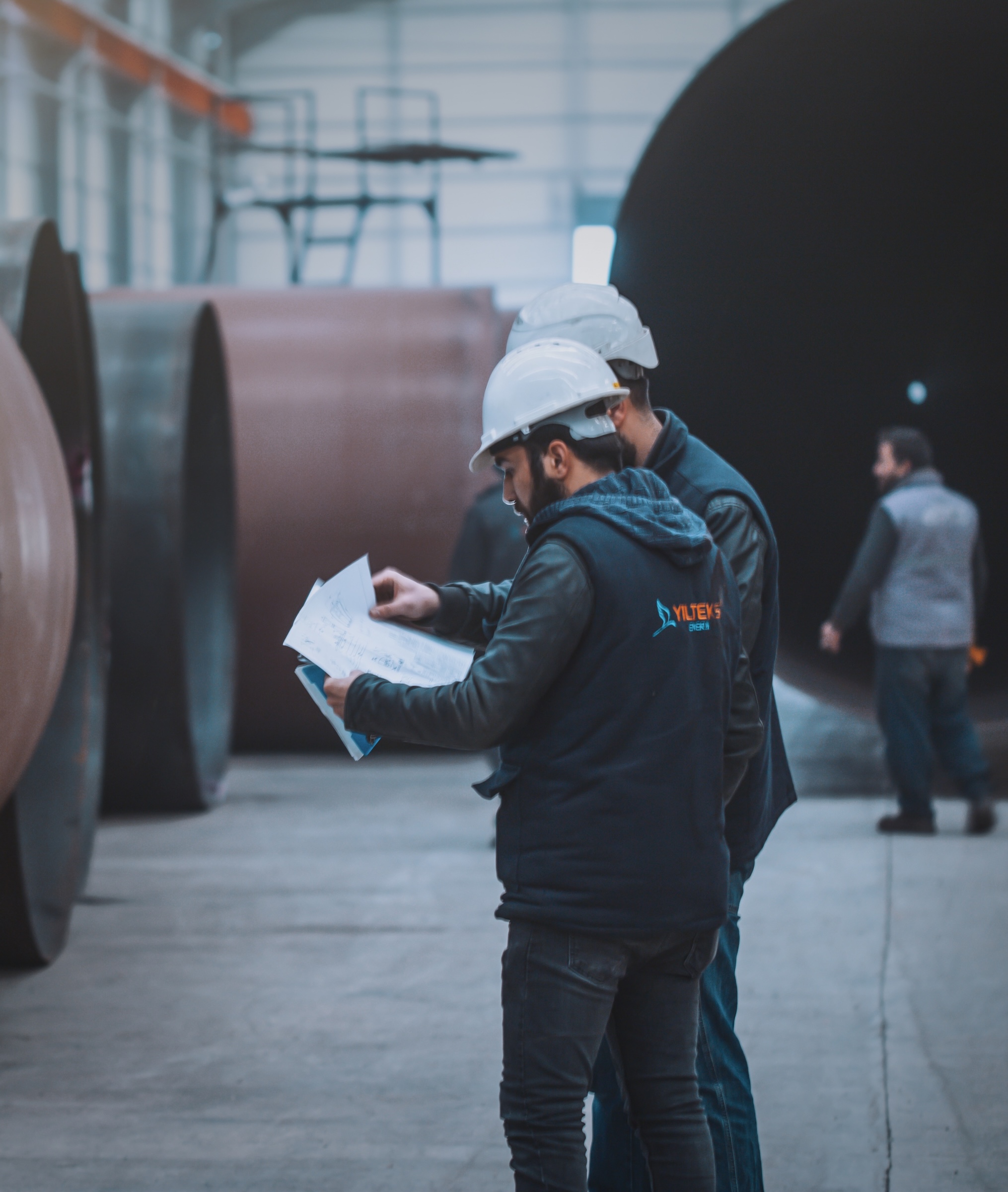
- Production and quality processes are carried out by a qualified and experienced engineer under the supervision of an independent inspection body, in accordance with standards and procedures.
- Welding operations are performed by certified welders in accordance with standards and materials.
- All welded joints are tested and inspected by competent and internationally certified NDT personnel.
- After assembly, all tanks are subjected to a hydrostatic pressure test.
- The outer surfaces of the tank are cleaned by sandblasting to SA quality before painting.
The best products are offered to customers by using corrosion-resistant, long-lasting, high-quality two-component paint products from internationally proven paint companies.
Technical Specifications
- Tank Capacity: 2 m³ or 40 m³
- Tank Class: Class 2 (Gases)
- Products to be Stored: UN 1965 – Hydrocarbon gas mixture: UN 1978 – Propane, UN 1011 – Butane, UN 1075 – Fuel gas, liquefied
- Operating Temperature: Between -30 °C and +70 °C
- Design Standards: EN 12493, ADR-RID, ASME, AD 2000 Merkblätter, PD 5500, CODAP 2000, or other standards.
Global Standards
- ISO 1161: Cargo Containers – Corner and Intermediate Connecting Devices
- ISO 668: Cargo Containers – Classification, Dimensions, and Gross Masses
- ISO 6346: Cargo Containers – Coding, Identification, and Marking
- ISO 830: Cargo Containers – Terminology
- ISO 1496/3: Cargo Containers – Tank Containers for Liquids, Gases, and
- Compressed Dry Cargo – Characteristics and Tests
- ASME Section VIII Division 1: ASME Pressure Vessel Code
- IMDG: International Maritime Dangerous Goods Code
- CSC: International Convention for Safe Containers
- TIR: International Convention on the Transport of Goods by Rail
- UIC: International Union of Railways Standard
Design Requirements
| Design Codes | : EN 12493 or EN 14025 ADR – RID – ADN – IMDG – UIC – CSC – TC – TIR |
|---|---|
| Container Type | : 1CC – 1BB – 1AA |
| Container Dimensions | : 20′ & 40′ |
| Design Approval | : CRS -TUV |
| Design Pressure | : 15 bar – 27 bar |
| Design Temperature | : -50 °C / +60 °C |